Good Follow-Through Shouldn't Depend on the Owner Remembering Everything
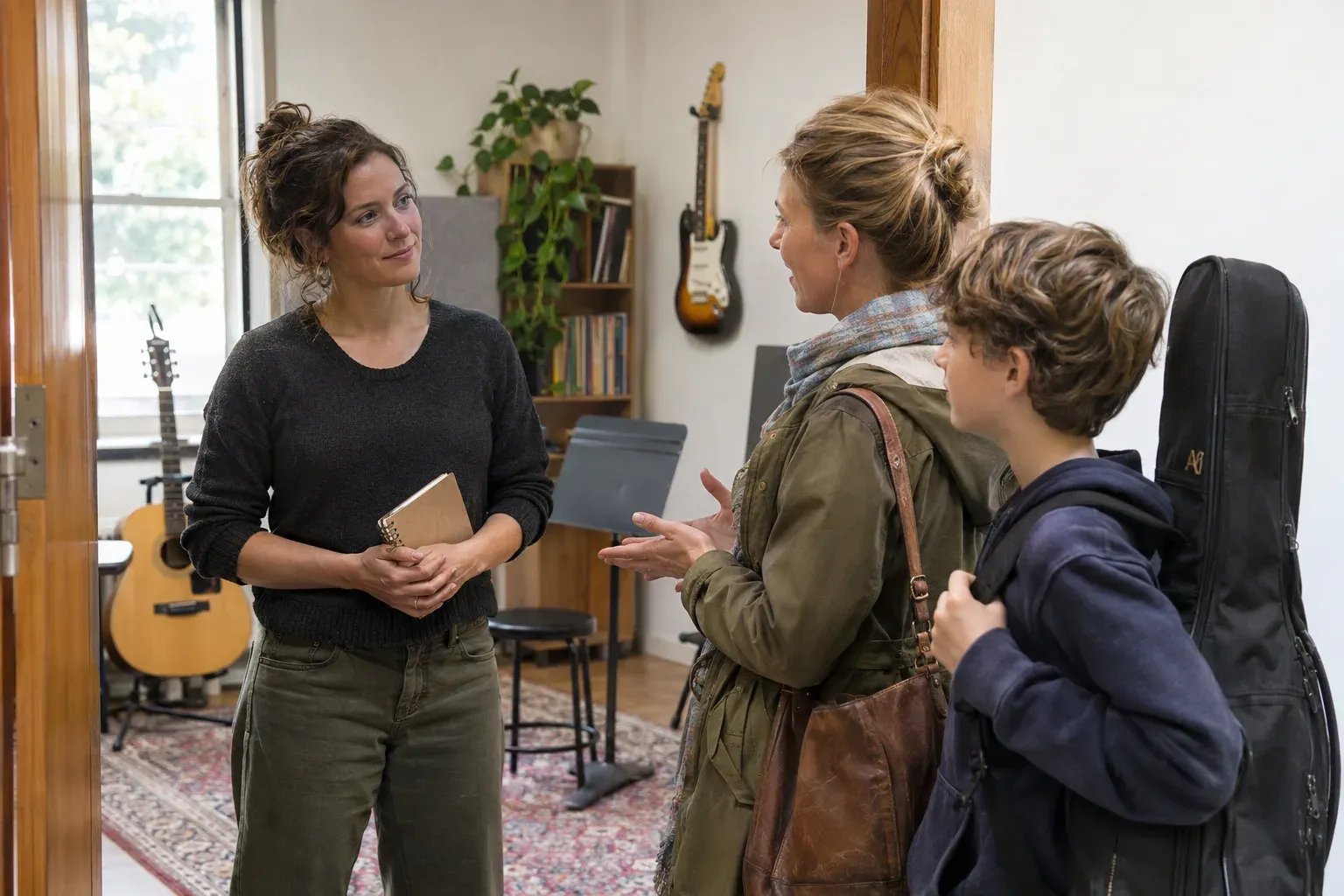
One thing I've learned from running a music school for 13 years is that families don't really care whose responsibility something was internally. They just know they asked a question on Tuesday, it's now Friday, and nobody has gotten back to them.
You could have a great team working really hard behind the scenes, but from the parent's perspective, it looks like nobody is paying attention.
I've dealt with this at So i Heard in just about every form: trial lesson inquiries, schedule changes, teacher absences, make-up lessons, billing questions, and the random things that come up when you're working with hundreds of families. None of these requests is especially complicated on its own. The challenge is that there are always a bunch of them happening at the same time.
For a long time, I think the natural tendency is for the owner or a really good front-desk person to become the school's memory. They know which parent is waiting for a call, which teacher needs to confirm a time, and which family was promised an answer by Thursday.
That works surprisingly well—until that person gets busy, takes a vacation, or leaves.
Every open item needs three things
I don't think this has to be complicated. For anything that isn't resolved right away, I want three things to be clear:
- Who's responsible? One person needs to own it, even if someone else has to help.
- What's the next step? Something specific, like "check Thursday availability with Sarah" instead of "follow up."
- When does it come back up? If we're waiting on a teacher, a parent, or a manager, there should still be a date to check on it again.
The key is that a request doesn't disappear just because someone sent an email or made a note. It stays open until there's an actual resolution.
A new lead isn't handled just because someone replied
Let's say a parent fills out your form looking for guitar lessons.
Someone responds, asks a couple of questions, and offers a trial time. Great. But what happens if the parent doesn't reply? Does anyone remember to check back in? If they book the trial, who's making sure they're confirmed? And after the trial, who reaches out to see if they'd like to enroll?
This is where a lot of schools lose people without realizing it. We can spend money getting a family interested, then leave the next step to chance because the front desk is busy checking students in or dealing with a teacher who's out sick.
I don't want our definition of success to be "we sent the email." I want to know whether the family booked, enrolled, declined, or still needs something from us.
Those are very different outcomes.
Parent requests need the same treatment
Imagine a parent asks for a make-up lesson, and the answer isn't immediately obvious. Maybe there's a policy question, or we need to see whether a teacher has availability.
It's totally reasonable not to have the answer right away. What's not reasonable is leaving the family wondering whether we're ever going to get back to them.
I'd rather have someone say, "Let me check on that and get back to you tomorrow," record the request, and make sure it comes back up when promised. If we need more time, we should say so.
The final answer might even be no. That's fine. Clear communication and actually following through on what we promised matter more than giving every family the answer they hoped for.
Make the open work visible
I think a manager should be able to open one screen and see what's unresolved, who's responsible, what's overdue, and what we're waiting on from families or teachers.
It doesn't need to be some elaborate project management setup with fourteen different statuses. A shared task board or spreadsheet is enough to start. What matters is that it gets used, and that someone checks it at the beginning and end of the day.
If a task has been sitting untouched, it should be obvious. If someone is out, another person should be able to pick up where they left off without digging through a personal inbox or trying to reconstruct a text conversation.
To me, that's not micromanagement. It's making sure we don't put the entire responsibility for remembering things on one employee.
This exact problem is one of the reasons Sam and I started building Music School Manager. We've built an agent that knows a school's information and policies, so it can help handle routine questions without everything landing on the front desk. And when a conversation needs a person, our internal inbox can turn it into a task assigned to someone on the team. It's not about automating every interaction. It's about making sure the handoff is clear and the request doesn't get lost.
Measure what gets finished, not just how busy everyone is
It's easy to measure how many calls were made or how many emails went out. Those numbers can be useful, but they don't tell you whether parents got what they needed.
I'd pay closer attention to how quickly new inquiries get a first response, whether trial families get contacted afterward, how many parent requests are still open, and how often promised follow-ups become overdue.
I also think you'll learn a lot just by looking at the requests that keep coming up. If the same billing issue is creating ten separate conversations every month, that's probably a process or policy problem worth fixing, not just another task for the team to complete.
Ultimately, I want to build a school where families can count on us to do what we say we'll do, even on a chaotic Tuesday afternoon. And I don't want the owner—or one superstar front-desk person—to be the only reason that happens.
Here's the test I keep coming back to: If you were unavailable for a week, could someone else immediately see every promise your school still owes a family?