How Music Schools Can Grow Past the 100–200 Student Plateau
There's an interesting stage in growing a music school where the things that got you to your first hundred students aren't necessarily the things that will get you to the next hundred.
When you're small, it's possible to keep a surprising amount of the business in your head. You know which families need a call back, which teachers have room in their schedules, and which students might be ready for something more challenging. As enrollment grows, all of those little details multiply.
At the same time, you might not be at the point where hiring a full management team makes financial sense. So the owner ends up doing a little bit of everything, and the school can start to feel more complicated than it should.
I don't think 100–200 students is some magical ceiling. I've run So i Heard through different sizes and staffing structures, and every version has had its own constraints. But I do think this is a range where the systems that worked when you were smaller start getting tested.
Getting past that point isn't just about finding another 50 families. It's about making better use of the students, teachers, and space you already have, while building an experience that people want to stick with.
Know what's actually limiting your schedule
One of the first things I'd look at is capacity, but not just the number of rooms or teachers on paper.
Let's say you have two teaching rooms and four prime after-school hours each weekday. That's 40 prime room-hours a week, or a theoretical maximum of 80 half-hour lessons. In practice, you have longer lessons, teacher availability, schedule gaps, and families who all want Tuesday at 5 p.m.
Hiring another teacher doesn't help if every room is already booked during the hours they can teach. Adding rooms doesn't help much if you can't staff them or find families who want the available times.
I want to know which constraint is real. Are we short on guitar teachers? Do we have openings that don't match family availability? Are there rooms sitting empty at times when a group program might work?
Sometimes the next growth opportunity is sitting in your existing calendar.
Give students more reasons to stay involved
I've become increasingly interested in what happens between a student's weekly lessons.
A kid might love their teacher but still start losing interest if every week feels like the same routine. Or they might be making great progress but have no idea what they can do with those new skills. The answer isn't always another private lesson.
At So i Heard, we're putting more emphasis on things like open jam sessions, teacher office hours, masterclasses, and recitals. They're ways for students to explore music with other people, get a little extra help, and feel like they're part of something larger than a thirty-minute appointment each week.
I especially like options that don't require a family to commit to another weekly class. A student should be able to try playing with others, explore a new style, or get help with something they're stuck on without us making it a whole new scheduling obligation.
These programs still need to be planned and staffed thoughtfully. But I think they're a much more interesting way to strengthen the school than simply trying to squeeze more individual lessons into the same hours.
Make student progress something everyone can see
One thing that can be surprisingly difficult in private music education is showing progress.
The teacher knows a student is improving. Maybe they're playing harder material, getting better at rhythm, or becoming more confident. But if the parent only hears the same half-hour lesson happening every week, they might not have a clear picture of how far their child has come.
That's why we're developing a six-level student progression system at So i Heard, along with regular progress reports. The idea is to give teachers a shared way to describe where a student is, what they're working on, and what comes next.
I'm not interested in turning music into another standardized test. Every student's goals are different, and the actual experience of making music should still be fun and personal. But having a clear sense of progress helps students stay motivated, gives parents something tangible to see, and helps teachers plan the next challenge.
It also opens up opportunities beyond the private lesson.
Use what you know about students to build better programs
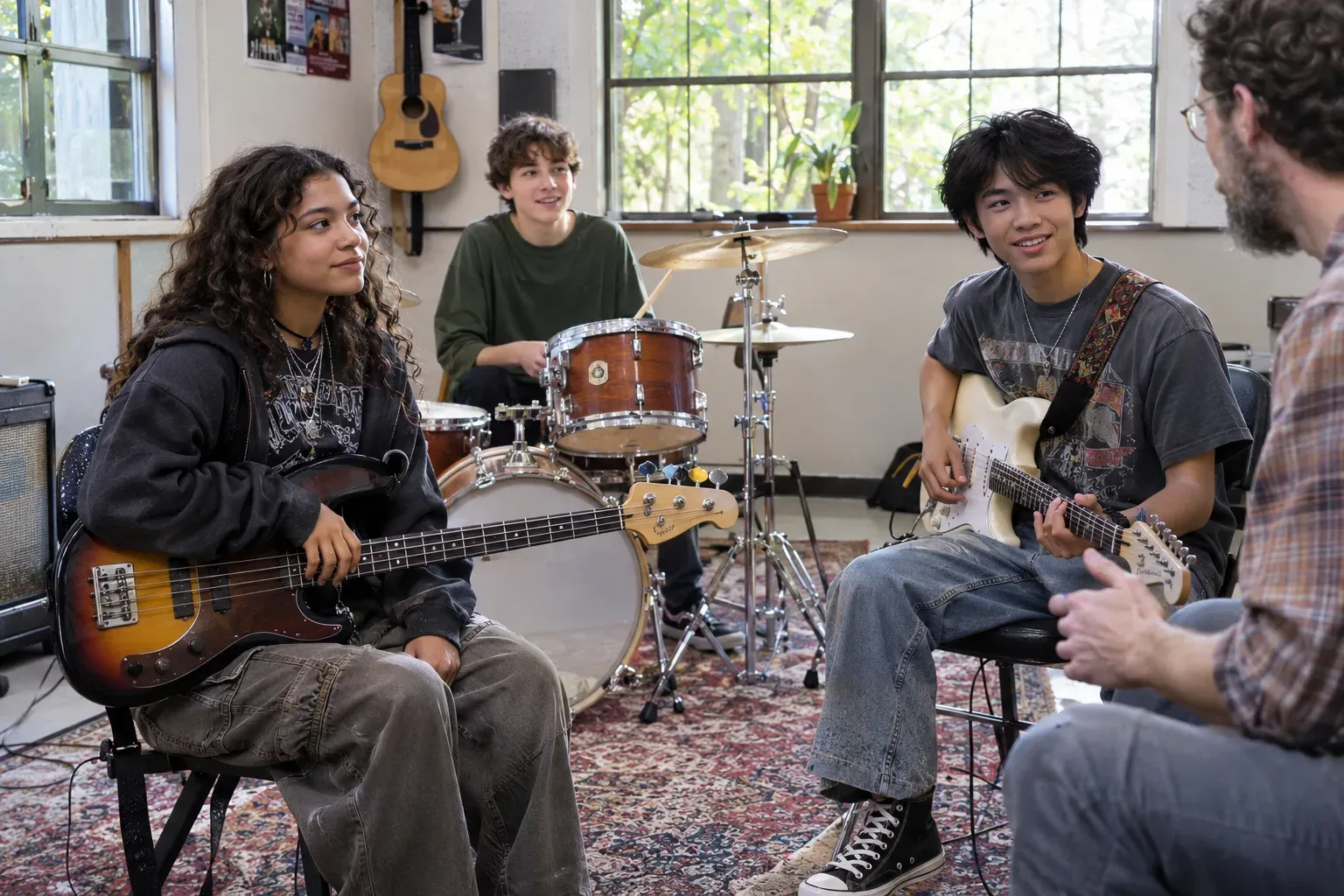
Imagine you have a twelve-year-old drummer who's reached the level where they're ready to play in a band. Somewhere else in your school, you probably have a guitarist, a bassist, and maybe a singer at a similar age and ability level.
The problem is that nobody has time to sit there and compare every student's age, instrument, level, and availability to figure out who might fit together.
I think a school should be able to spot those opportunities easily. When students are ready for a band, a second instrument, or some other new challenge, the next step should be obvious to the team.
This isn't about trying to sell every family another program. It's about giving students something they're genuinely ready for, at the right time. That's good for their musical growth, and it gives them another reason to stay excited about the school.
Don't forget about students who stopped taking lessons
Not every student who leaves is unhappy. Sometimes sports schedules change. Sometimes a family takes a break for the summer. Sometimes the lesson time just stops working.
I've always thought it's worth staying in touch with those families, provided they want to hear from you. A former student who had a good experience may be interested in returning when the right opportunity comes along.
But there's a big difference between sending everyone the same generic "we miss you" email and reaching out with something relevant. Maybe you now have a teacher available at the time they wanted. Maybe you're starting a band for their age group. Maybe it's simply a good time to ask if they'd like to pick up where they left off.
Doing that consistently by hand is a lot of work, which is exactly the sort of thing I'd look to automate.
Let your systems help you find the next opportunity
This thinking is a big part of what Sam and I are building into Music School Manager. We want student progress to be useful information, not just notes that sit in a teacher's account.
That means tools to help students and teachers track musical growth, smart band matching based on things like instrument, age, and ability level, and ways to identify students who may be losing interest before they cancel. We're also building automated reactivation campaigns so schools can reach out to former students with relevant opportunities, without asking the front desk to remember every individual follow-up.
None of those tools replaces a great teacher or a staff member who knows the families. The point is to make the information a school already has easier to act on. A good idea—like inviting a student into their first band—shouldn't depend on the owner happening to remember it during a busy Tuesday afternoon.
Measure more than how many students you have
Enrollment matters, of course. But if I want to understand what will help a school grow, I also want to know:
- How much of our actual prime teaching capacity are we using?
- How many students are continuing from one term to the next?
- Are students progressing and participating in things beyond their private lessons?
- How many good-fit prospects can't find a workable lesson time?
- Why are families leaving, and how many former students are coming back?
- How much extra administrative work does each increase in enrollment create?
You don't need a complicated dashboard to answer these questions. You need enough visibility to tell the difference between a marketing problem, a scheduling problem, and a student-engagement problem. Each one calls for a different solution.
When I think about growing a music school, I try to ask a different question than just "How do we get 50 more students?"
I want to know: If 50 more students enrolled tomorrow, what would start breaking?
Fix those things, make better use of what you already have, and give students more reasons to stay. That's how you build a school that's ready for the next stage of growth.
I'm curious: What's the first thing that starts getting difficult when your school's enrollment goes up?